


What is a cataract?
The lens inside your eye is normally clear. With age, diabetes, long-term steroid use or an eye injury, it slowly turns cloudy. That clouding is a cataract. Light scatters instead of focusing, so the world looks dull, hazy or yellowed.
Signs you may have a cataract
- Blurred or foggy vision that glasses no longer fix
- Glare and halos around headlights at night
- Colours look faded or yellow
- Needing brighter light to read
- Frequent changes in your glasses prescription
- Double vision in one eye
The only effective treatment is surgery. There is no eye drop or diet that clears a cataract once it forms.
How phacoemulsification works
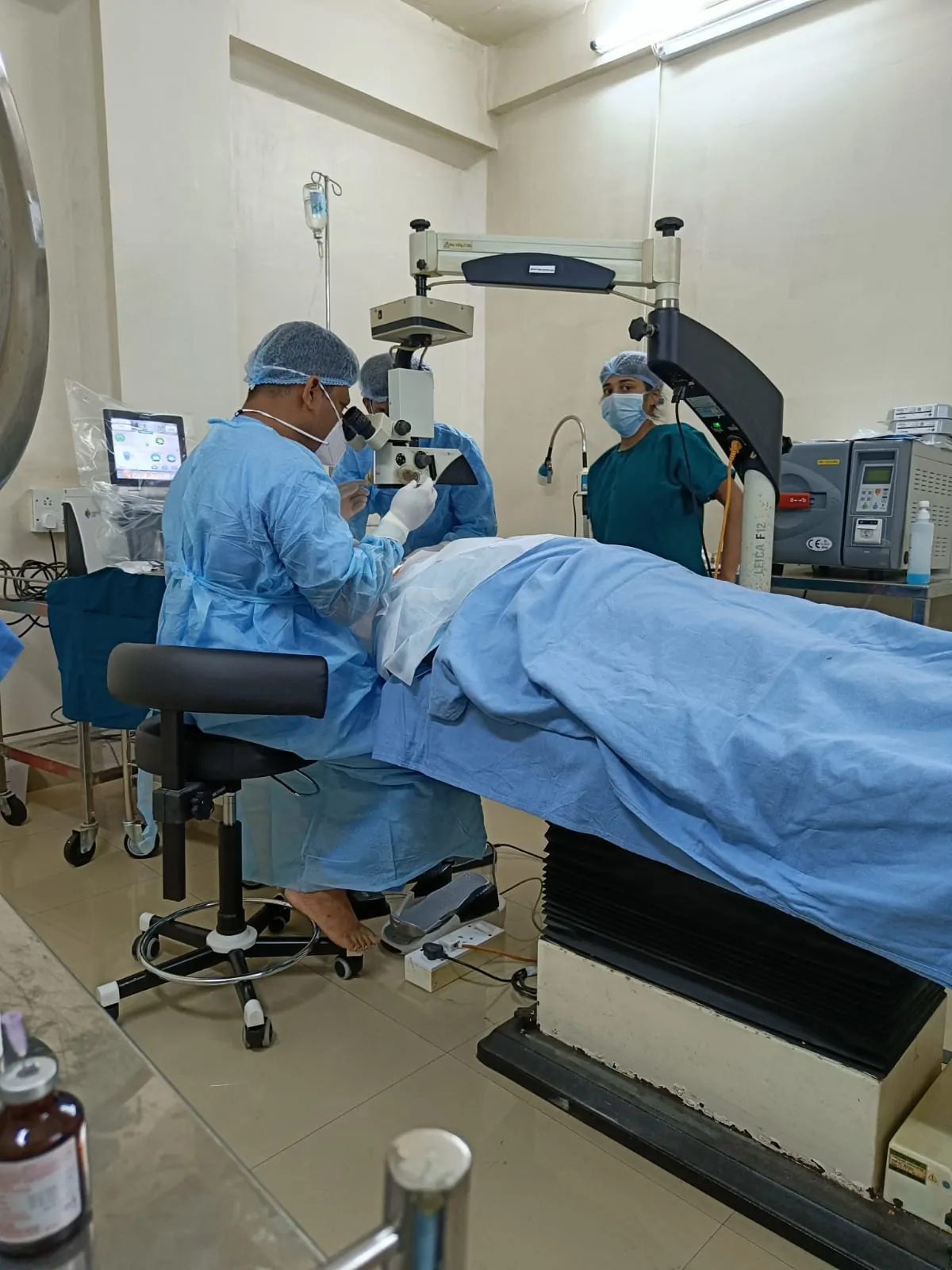
Phacoemulsification, or phaco, is the modern standard for cataract surgery. Your surgeon makes a tiny opening at the edge of the cornea, softens the cloudy lens with ultrasound and gently removes it. A folded artificial lens, called an intraocular lens or IOL, is placed in its position and unfolds inside the eye.
- Usually done under numbing drops, so most patients need no injection
- The procedure itself takes about 15 to 30 minutes per eye
- Stitches are rarely needed
- You go home the same day
Choosing your lens
The lens you choose decides how much you will rely on glasses after surgery. We offer a wide range, and your surgeon will recommend options based on your eye measurements, lifestyle and budget.
| Lens type | What it does | Good for |
|---|---|---|
| Monofocal | Sharp vision at one distance, usually far | Most patients, with reading glasses for near work |
| Toric | Corrects astigmatism as well as the cataract | People with significant astigmatism |
| Extended depth of focus (EDOF) | Clear vision from far to arm’s length | Driving and computer work with fewer glasses |
| Multifocal and trifocal | Focus at far, intermediate and near | People who want the least dependence on glasses |
Read more in our guide to choosing the right lens for cataract surgery.
Childhood cataracts
Some children are born with a cataract or develop one early. Treating it promptly matters, because a child’s visual system is still developing. We diagnose and manage juvenile cataracts with careful follow-up, including glasses and lazy eye treatment after surgery when needed.
Recovery after cataract surgery
- Vision often improves within a day or two and keeps settling over a few weeks
- You will use eye drops for a few weeks to prevent infection and inflammation
- Avoid rubbing your eye, swimming and dusty places until your doctor says it is safe
- Most people return to desk work within a few days
- New glasses, if needed, are prescribed after the eye has healed
Cost and insurance
The cost depends mainly on the lens you choose and the technology used. We explain every option and its price at your consultation, before you decide. Cataract surgery is usually covered by health insurance, and we offer cashless treatment with many insurers and TPAs. See insurance and payments, or read what affects cataract surgery cost in Bengaluru.
Where to get treated
Cataract surgery is available at our HSR Layout, Hosa Road and Banaswadi clinics.